Monday, 27 February 2017

Certificate rating

After researching the BBFC's age classifications it was decided that our film would have a certificate rating of 15. This is because it best-fits the discrimination, drugs, imitable behaviour, language, nudity, sex, threat and violence categories.

Certificate rating 15: 

Discrimination
"The work as a whole must not endorse discriminatory language or behaviour, although there may be racist, homophobic or other discriminatory themes and language."

Drugs
"Drug taking may be shown but the work as a whole must not promote or encourage drug misuse (for example, through instructional detail). The misuse of easily accessible and highly dangerous substances (for example, aerosols or solvents) is unlikely to be acceptable"

Imitable behaviour
"Dangerous behaviour (for example, hanging, suicide and self-harming) should not dwell on detail which could be copied. Whether the depiction of easily accessible weapons is acceptable will depend on factors such as realism, context and setting."

Language
"There may be strong language. Very strong language may be permitted, depending on the manner in which it is used, who is using the language, its frequency within the work as a whole and any special contextual justification."

Nudity
"There are no constraints on nudity in a non-sexual or educational context. There may be nudity in a sexual context but usually without strong detail."

Sex
"Sexual activity may be portrayed, but usually without strong detail. There may be strong verbal references to sexual behaviour, but the strongest references are unlikely to be acceptable unless justified by context. Works whose primary purpose is sexual arousal or stimulation are unlikely to be acceptable."

Threat
"There may be strong threat and horror. A sustained focus on sadistic or sexual threat is unlikely to be acceptable."

Violence
"Violence may be strong but should not dwell on the infliction of pain or injury. The strongest gory images are unlikely to be acceptable. Strong sadistic violence is also unlikely to be acceptable. There may be detailed verbal references to sexual violence but the depiction of sexual violence must be discreet and justified by context."

Shooting Schedule

To ensure we stayed on track we created a shooting schedule. This acted as guide for us and it aided us greatly. It made sure that we were all aware of what was going on meaning we didn't have previous plans on the same day. We were able to decide on days where we were all free and able to play our part in the making of our opening.


Conventions of Horror

Convention-A way in which something is usually done. 


Setting:

  • Huge cities or run down ghost towns - anything that connotes isolation.
  • Something with history behind it. For example, an abandoned house which a family died in.
  • Stereotypical locations: Old house, the woods, the desert, a run down hospital, an old mental institute, a church yard, a summer camp, a large house (lots of hidden areas with large doors), a farm, underground and many more.


Cinematography: 
  • High and low angles can connote fear and nightmares.
  • POV shots are often used as they allow the audience to gather a greater feeling of fear. This could be done through the protagonists perspective (creating a feeling of tension and fear) or through the antagonists perspective (creating an anxious feeling for the audience). 
  • Hand held shots are popular within horror films as it makes it harder for the audience to work out what is going on - creating the feeling of terror.
  • The use of depth of field makes it harder for the audience to spot the protagonist creeping up on the antagonist.
  • A good use of sound is vital within a horror film. Sound effects, when used correctly, are very effective on the audience. Diegetic noise, such as foot steps and non-diegetic noise, such as a heartbeat combine and create a horror-like mood and atmosphere.
  • Editing can create unsettling tension and suspense.


Narrative Structure: 
  • Always a hero/protagonist that has usually embarked on a mission to solve/kill problems.
  • An event takes place which turns the killer insane (e.g. their childhood). The antagonist returns to their home town and stalks teenagers. The teenagers represent the immoral and usually come across stupid. Most the teenagers are slaughtered whilst there is usually one survivor, a female character.


Character types:

  • The main hero/protagonist
  • The antagonist, often a monster, serial killer, mutant or alien.
  • The immoral teenagers (always killed) 
  • Eerie children which are against the protagonist
  • Good or bad police officers

Expectations of a Horror

I asked the following question to ten people, of varied ages:
What do you expect out of a horror film?
This is how they responded...


Definition of horror: An overwhelming and painful feeling caused by something frightfully shocking, terrifying, or revolting; a shuddering fear.


The expectation of a horror film is to enforce a shuddering fear or a frightfully shocking feeling amongst the audience. When a film claims to be horror and are found to be un-frightful, they are considered unsuccessful and  gain a bad reputation. The audience viewing a horror film are aware that they are going to watch something which has been produced to scare them, therefore they are aware of what they could be enrolling for. This means that horror films shouldn't hold back from something because it is 'too scary', the audience are exchanging their time for a thrill/shock/fright - the audience expects to be scared and left with a shuddering fear.

However, old horror films focused on the fear and psychological side of horror much more than nowadays. They often focus on more explicit scenarios such as rape, murder and kidnapping in todays stereotypical horror.

Iconography-HORROR

Iconography-an important aspect of genre. We expect to see certain objects on screen when we see a particular genre. For example, in a sci-fi film we expect to see something out of the ordinary such as aliens, creatures and monsters.

Why is it used in film? 
It is used in film to create visual language within the film that relates to the specific genre; it is a genre indicator. 


Horror: 


Aesthetics: Usually set in a dim, dark setting with strong contrast of red representing blood and danger. As well as this, aspects within a horror scene are often white. This is usually to draw attention to it due to the disparity between white and and the darker colours. 

Lighting: Low-key lighting is used most in horror films. This lighting makes it more mysterious and eerie as it can create dark shadows and unfamiliar shapes. The darkness also represents the unknowing, this makes people feel very uncomfortable. 

Props: Props are a key part within a film as they allow the audience to further identify the genre. Stereotypical typical props within a horror film: needles, saw, a mask, a cutting tool, blood and locked doors.

Collage of iconography: 


Wednesday, 8 February 2017

Iconic Horror Directors


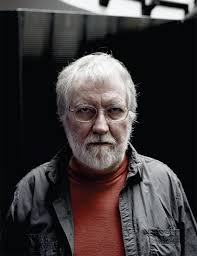
Name: Tobe Hooper


Image result for tobe hooper
D.O.B: January 25th 1943

Known for: The Texas Chain Saw Massacre (1974) , Poltergeist (1982)


"I don't believe in using too much graphic violence, although I've done it.  It's better to be suggestive and to allow the viewer to fill the blanks in with their mind" - Tobe Hooper


Name: John Carpenter

Image result for john carpenterD.O.B: January 16th 1948

Known for: Halloween (1968), Big Trouble in Little China (1986),
The Princess of Darkness (1987)

"Evil hiding among us is an ancient theme." - John Carpenter


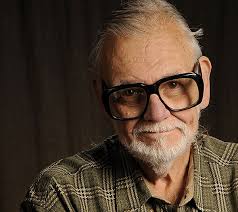
Image result for george romero
Name: George A. Romero

D.O.B: February 4th 1940

Known for: Night of the Living Dead (1968), Dawn of the Dead (1978), Day of the Dead (1985),  Land of the Dead (2005)

"Reality is much worse than any stories about ghosts, zombies or aliens." - George A. Romero


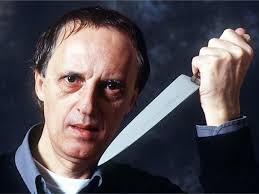
Image result for dario argento

Name: Dario Argento


D.O.B: 7th September 1940


Known for: Suspiria (1977), Deep Red (1975), Inferno (1980)


"Every writer, to some extent, writes about himself." - Dario Argento


Image result for alfred hitchcock

Name: Alfred Hitchcock


D.O.B: 13th August 1899


Known for: Psycho (1960), The Birds (1963), Vertigo (1968)


"The length of a film should be directly related to the endurance of the human bladder" - Alfred Hitchcock